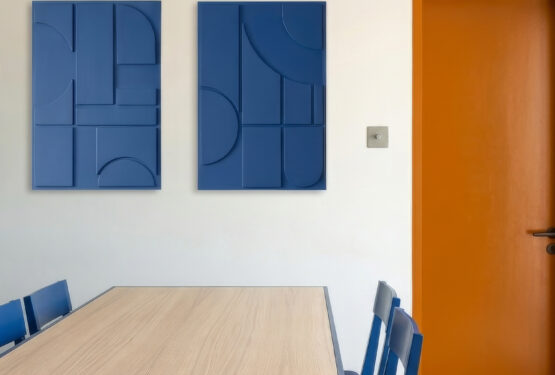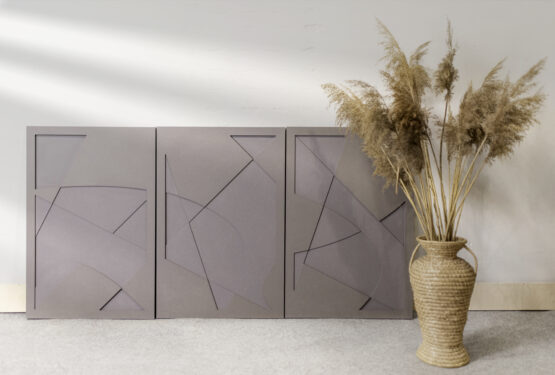

In contemporary interior architecture, the most compelling spaces are rarely defined by extremes. They live in the balance between nature and technology, warmth and precision, emotion and engineering. Veneered boards sit precisely at that intersection. They deliver the tactile depth and visual richness of real wood while offering the dimensional stability, consistency, and performance demanded by modern construction and manufacturing processes.
For architects, designers, and developers working at a high level, veneered boards are no longer a secondary option to solid timber. They are a strategic material choice, enabling refined detailing, scalable production, and exacting control over finish and form. When combined with advanced fabrication techniques such as CNC routing, laser engraving, and integrated lighting systems, veneered panels become a powerful design language rather than a mere surface treatment.
This article explores why veneered boards have become essential in contemporary interiors, how their technical advantages unlock creative freedom, and how they perform in real-world applications through two detailed case studies.
Why Veneered Boards Matter in Modern Design
Solid wood has always been associated with prestige, authenticity, and craftsmanship. Yet it also brings inherent limitations: movement caused by humidity, unpredictable grain behaviour, higher material waste, and restrictions on large-format applications. Veneered boards were developed not to imitate wood, but to optimise it.
A veneered board consists of a thin layer of real wood veneer bonded to an engineered substrate such as MDF, plywood, or particleboard. This construction offers several critical advantages:
- Dimensional stability across large surfaces
- Uniform thickness and flatness, ideal for precision detailing
- Efficient use of natural timber resources
- Predictable performance in controlled interior environments
Crucially, the veneer itself is genuine wood. Every grain, pore, and tonal variation is real, preserving the authenticity that designers and clients expect from premium interiors.
Oak and Walnut: Two Species, Infinite Expressions
Among the most widely specified veneer species, Oak and Walnut occupy distinct yet complementary positions in interior design.
Oak veneer is celebrated for its structural grain, light-to-medium tones, and exceptional versatility. It performs beautifully in minimal, Scandinavian, and architectural interiors where texture plays a key role without overwhelming the space. Oak responds exceptionally well to CNC machining, making it ideal for geometric patterns, acoustic panels, and sculptural wall systems.
Walnut veneer, by contrast, is richer, deeper, and more expressive. Its chocolate-brown hues, flowing grain, and natural contrast convey warmth and sophistication. Walnut is frequently used in residential luxury interiors, hospitality environments, and executive spaces where atmosphere is as important as form.
Both species offer excellent compatibility with modern fabrication technologies, allowing designers to push beyond flat panels into three-dimensional, immersive environments.
Designed for Precision: CNC, Laser, and Custom Patterning
One of the defining advantages of veneered boards is their compatibility with digital fabrication. Unlike solid timber, engineered substrates provide a predictable core that allows for clean edges, consistent depths, and repeatable results.
This enables:
- CNC-routed geometric patterns
- Engraved branding or graphic motifs
- Curved or radius panels with tight tolerances
- Integrated lighting recesses and shadow gaps
The veneering process ensures that even after machining, the surface remains visually cohesive. Patterns feel intentional, not disruptive. The grain continues across panels, reinforcing the sense of material continuity.
For branded environments, retail spaces, and bespoke interiors, this level of control is invaluable. Precision does not come at the cost of warmth. Instead, technology amplifies the natural beauty of wood.
Case Study: Walnut Veneer Interiors
Soft Architecture Through Full-Height Forms
In this private residential project, the brief was clear: create a calm, timeless interior where architectural elements felt integrated rather than applied. Walnut veneer became the primary material language, selected for its warmth, depth, and ability to unify multiple functional zones.
Wardrobe System: Full-Height with Rounded Corners
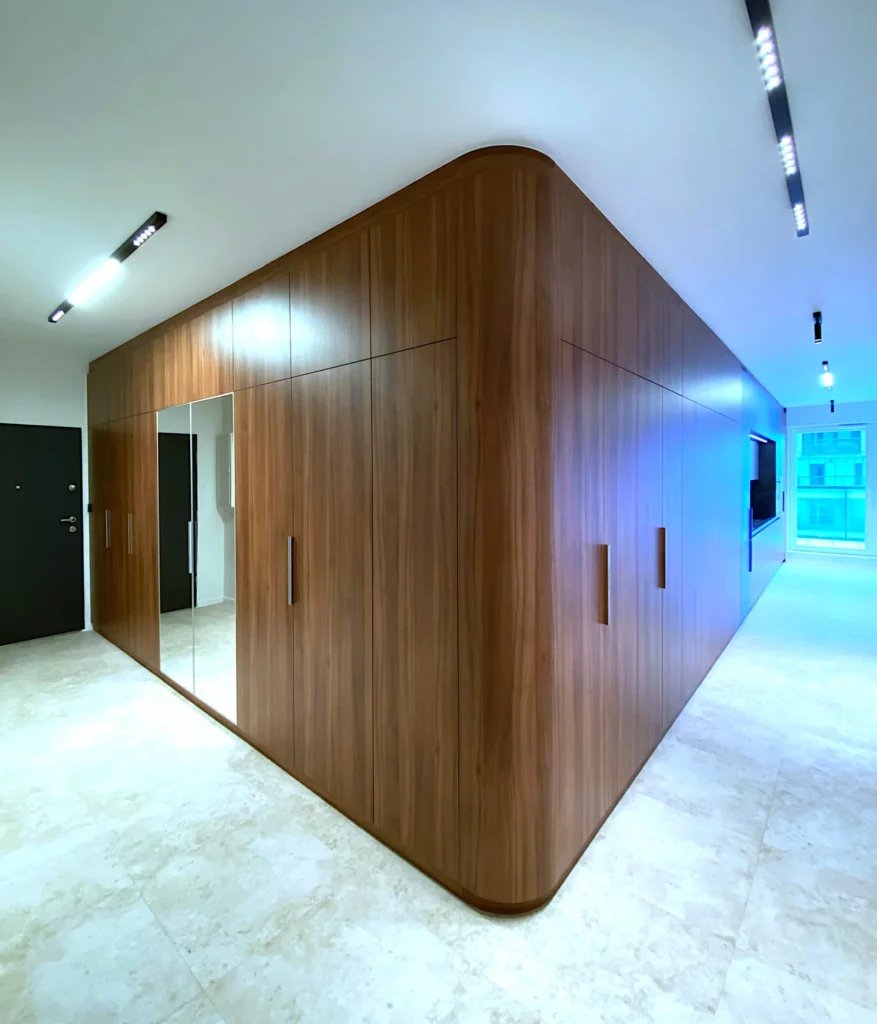
The wardrobe was designed as a full-height architectural element rather than a piece of furniture. Floor-to-ceiling walnut veneered panels create a continuous vertical rhythm, visually expanding the space while maintaining a sense of enclosure.
Key design features included:
- Soft, rounded vertical corners, CNC-machined for precision
- Invisible door lines, maintaining a monolithic appearance
- Matched veneer grain, flowing seamlessly across doors and panels
The rounded corners were particularly significant. Achieving this level of curvature in solid wood would introduce risks of cracking or inconsistent grain behaviour. Veneered boards allowed for controlled bending and machining, delivering softness without sacrificing accuracy.
The result is an element that feels architectural, calm, and tactile. The walnut grain softens the geometry, preventing the mass from feeling heavy or imposing.
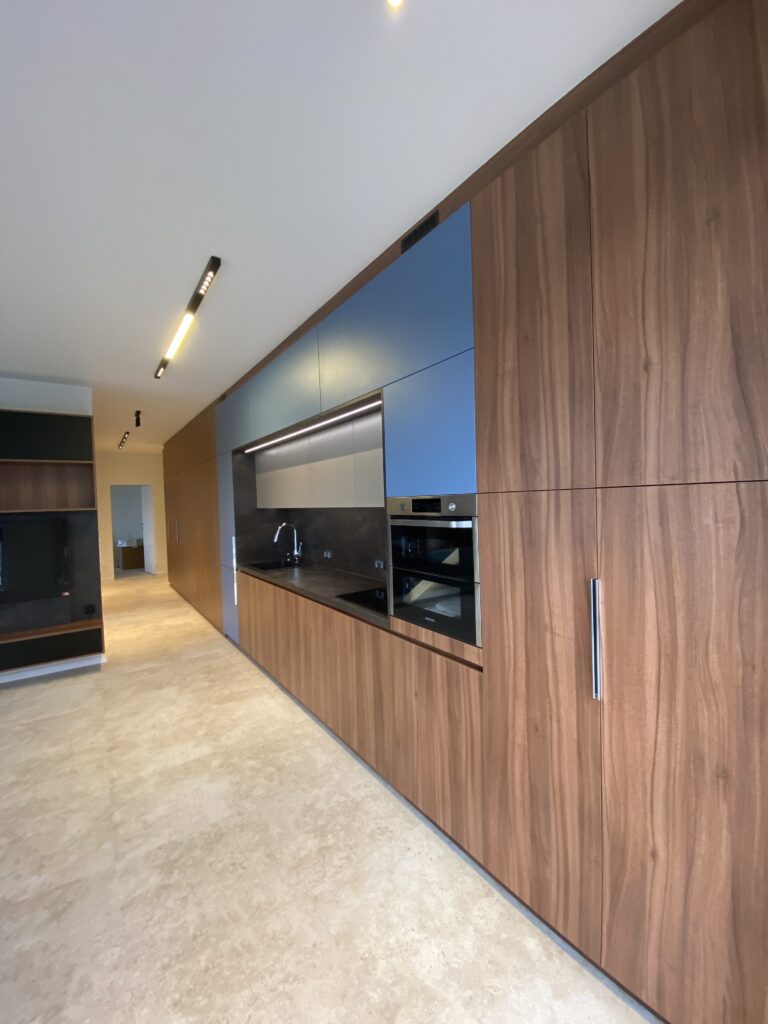
Kitchen Cabinetry: Seamless Integration
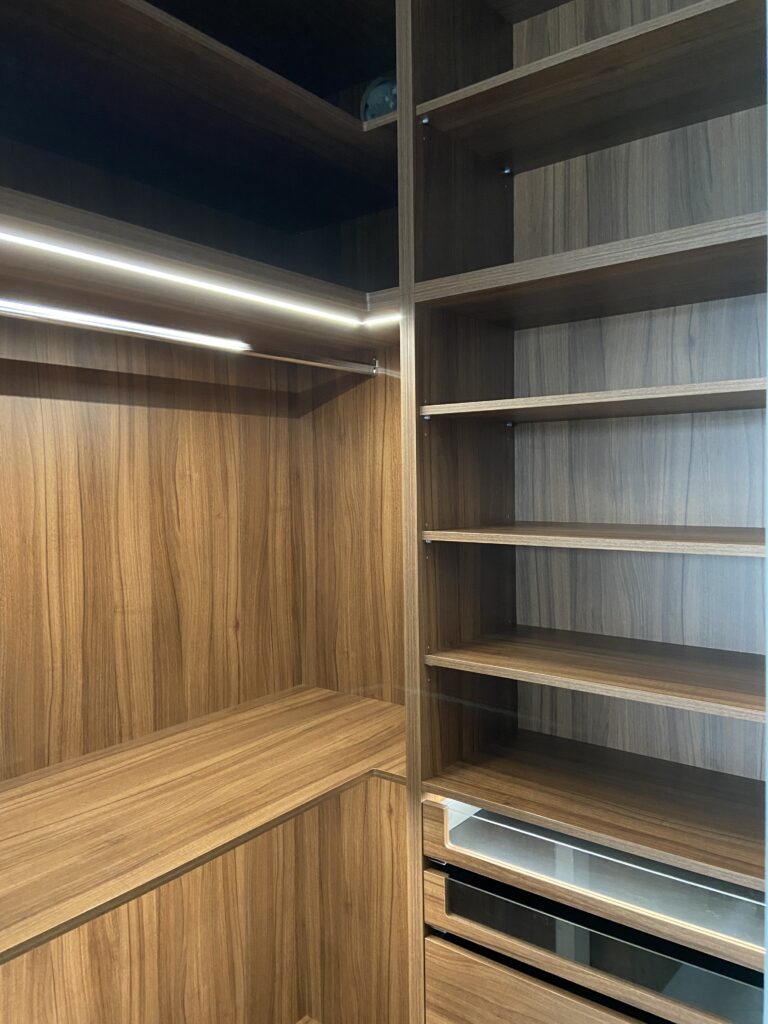
The same walnut veneer was extended into the kitchen, reinforcing continuity throughout the interior. Cabinet fronts were designed as flat, uninterrupted planes with integrated appliances concealed behind veneered doors.
Highlights of the execution:
- Integrated appliance fronts, maintaining visual consistency
- Handle-less design, using push-to-open and recessed grips
- Exact veneer matching, ensuring colour and grain continuity
Here, veneered boards excelled in their ability to maintain tight tolerances across large surfaces. Doors align perfectly, gaps remain consistent, and the veneer finish provides the warmth of timber without the maintenance challenges associated with solid wood kitchens.
This project demonstrates how veneered boards enable architectural restraint while delivering material richness. The result is an interior that feels composed, deliberate, and enduring.
Sustainability and Resource Efficiency
Beyond aesthetics and performance, veneered boards represent a responsible approach to material use. By maximising the yield from each log, veneer production significantly reduces waste compared to solid timber applications.
Additional sustainability advantages include:
- Lower material consumption of rare species
- Improved lifecycle stability, reducing replacement needs
- Compatibility with certified substrates and finishes
For projects targeting environmental certifications or long-term durability, veneered boards align well with both ecological and economic objectives.
Where Veneered Boards Perform Best
Veneered boards are particularly well suited for:
- Interior wall systems and feature panels
- Custom cabinetry and joinery
- Retail and branded environments
- Hospitality spaces including bars, hotels, and lounges
- Corporate interiors and executive areas
Their ability to scale from intimate residential details to large commercial installations makes them one of the most versatile materials in contemporary interior design.
Conclusion: Precision Meets Natural Appeal
Veneered boards are not a compromise between solid wood and engineered materials. They are a refinement of both. By combining the authenticity of real wood with the predictability of modern substrates, they empower designers to work with greater confidence, creativity, and control.
As demonstrated in the walnut residential interiors and the oak bar installation, veneered panels can be soft or bold, restrained or expressive. They adapt to the narrative of the space while maintaining a consistent material language.
In an era where interiors must perform technically, emotionally, and sustainably, veneered boards offer a rare combination of attributes. Precision meets nature. Technology enhances craftsmanship. And design gains a material that is as reliable as it is beautiful.